
A joint report by DSO Entity and ENTSO-E, presented at the European Commissions’ 12th Energy Infrastructure Forum, paints a clear picture: Europe’s electricity system is growing more decentralised, electrified, and complex and keeping it running smoothly will require DSOs and TSOs to work closely together.
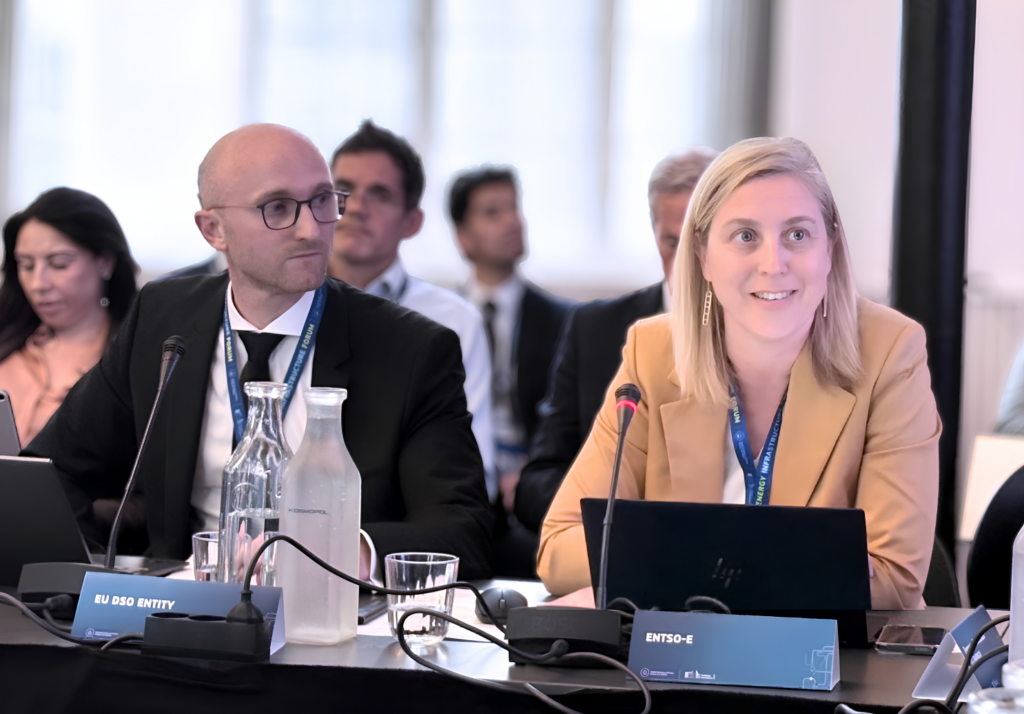
The report was presented by ENTSO-E System Development Committee Chair Patricia Labra, as well as DSO Entity’s Task Force Network Planning Chair Martin Uhrig during Panel Session 3: Grid Access & Grid Connections, where discussions focused on improving coordination to accelerate grid connections and enable the energy transition.
This collaboration showcases a shift toward more structured and continuous cooperation, with system operators increasingly aligning data, scenarios, and investment planning across voltage levels.
In practice, this means moving beyond siloed approaches. DSOs and TSOs are working together to better anticipate demand growth, integrate renewable energy, and manage growing volumes of connection requests, helping to avoid bottlenecks and optimise infrastructure investments.
The report draws on examples from Ireland, Italy, Latvia, and Hungary to show how different coordination models can deliver real results, whether through joint planning, coordinated connection processes, or structured data exchange. Despite their differences, these countries share a common playbook: coordinate early, share data regularly, and align planning assumptions from the outset.
Overall, more systematic DSO–TSO collaboration is a cornerstone of a resilient, cost-efficient, and future-ready European electricity system
Find the report here.